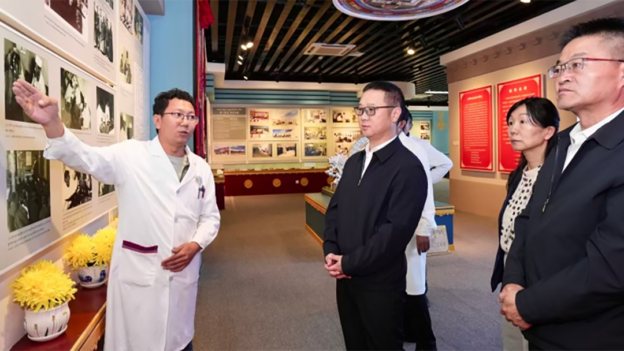
NMPA Commissioner Huang Guo Inspects Tibetan Medicine Development in Xizang – Signals Push on Standards, Classical‑Formula Drug Conversion and Sustainable Sourcing

NMPA Commissioner Huang Guo Inspects Tibetan Medicine Development in Xizang – Signals Push on Standards, Classical‑Formula Drug Conversion and Sustainable Sourcing

Lhasa, Xizang – 12 Sep 2026Huang Guo, Party Secretary and Commissioner of China’s National Medical Products Administration (NMPA), recently led a delegation to Lhasa and Shannan (Lhoka) in the Xizang Autonomous Region to investigate the high‑quality development of Tibetan medicine, visiting pharmaceutical enterprises, medical institutions, grassroots market regulators and Tibetan medicinal‑material cultivation and breeding bases – and directing regulators to accelerate Tibetan medicine standard‑setting, conversion of classical formulas and hospital preparations into new drugs, and standardized cultivation of Tibetan medicinal materials.

Inspection Milestone

ItemDetail
Delegation HeadHuang Guo – Party Secretary & Commissioner, NMPA
LocationsLhasa and Shannan, Xizang Autonomous Region
Sites VisitedPharmaceutical enterprises, medical institutions, grassroots market regulation departments, Tibetan medicinal‑material cultivation & breeding bases
Focus AreasTibetan medicine standard formulation/revision; new drug R&D; application of institutional preparations in medical facilities; grassroots drug regulation; production management of Tibetan medicinal materials
Participating UnitsHeads of relevant NMPA departments and directly affiliated units
Stated GoalInherit, develop and utilize Tibetan medicine well – upholding both inheritance and innovation

Inspection Itinerary & Focus

  • Lhasa: The delegation visited pharmaceutical enterprises and medical institutions, examining in detail the formulation and revision of Tibetan medicine standards, new Tibetan drug R&D, and the clinical application of Tibetan medicine institutional preparations (hospital‑compounded formulations).
  • Shannan: The delegation inspected grassroots market regulation departments, pharmaceutical enterprises and Tibetan medicinal‑material cultivation and breeding bases, reviewing grassroots drug supervision, innovative drug development and production management of Tibetan medicinal materials.

Policy Directives Outlined

  • Standards Acceleration: Hasten the improvement of the Tibetan medicine standards system, leveraging the sector’s unique resource endowment and formulary experience.
  • Classical‑Formula Development: Intensify the development and utilization of ancient classical formulas, and promote the conversion of classical prescriptions and medical‑institution preparations into new drugs.
  • Three‑in‑One Evidence System: Deepen the application – in Tibetan new drug R&D – of the registration review evidence system that combines traditional Chinese medicine theory, human‑use experience and clinical trials, and strengthen communication and exchange across the entire R&D process.
  • Resource Protection & Sustainability: Strengthen the protection of Tibetan medicinal‑material resources, advance standardized (Good Agricultural Practice‑style) cultivation, ensure material quality and promote the sustainable development of Tibetan medicine.

Regulatory Context

  • Three‑Combined Evidence Pathway: The theory–human experience–clinical trial evidence framework was introduced nationally for traditional Chinese medicine registration, allowing human‑use experience to support drug applications – its explicit extension to Tibetan medicine lowers the evidentiary friction for ethnic‑medicine drug developers.
  • Institutional‑Preparation Pipeline: Hospital preparations with long clinical track records are a recognized seed pool for new drug conversion under China’s TCM reform agenda; Tibetan medicine institutions in Xizang hold sizable preparation portfolios.
  • Classical Formula Catalogs: Ancient classical formulas enjoy simplified registration pathways when developed per catalogue requirements, a mechanism the NMPA now seeks to activate for Tibetan formulary heritage.
  • Grassroots Supervision: Inspection of county‑level market regulation capacity signals attention to enforcement infrastructure for cultivation, processing and distribution quality of Tibetan medicinal materials.

Market Impact & Outlook

  • Ethnic‑Medicine Modernization: The inspection places Tibetan medicine high‑quality development squarely on the NMPA’s national agenda, likely catalyzing standards issuance, registration guidance and pilot programs for Xizang‑based enterprises.
  • R&D Opportunity Window: Developers able to package classical formulas or institutional preparations into registrable new drugs – supported by the three‑combined evidence system – gain a differentiated, policy‑endorsed pathway.
  • Supply‑Chain Upgrading: Emphasis on resource protection and standardized cultivation points to investment in GAP‑compliant cultivation and breeding bases, with implications for material quality, traceability and long‑term supply security.
  • Timeline & Measures: Specific policy instruments, funding and deadlines emerging from the inspection were not disclosed in the readout.

Forward‑Looking Statements
This brief contains forward‑looking statements regarding Tibetan medicine standard‑setting, classical‑formula drug conversion, registration evidence‑system application and cultivation standardization following the NMPA inspection in Xizang. Actual outcomes may differ due to risks including policy formulation timelines, registration review requirements, resource and supply‑chain conditions, and enterprise execution capabilities.-China Health Reform Pulse

Policy Source: https://www.nmpa.gov.cn/yaowen/ypjgyw/ypyw/20260911195710154.html

Henan Proposes Standardizing and Consolidating Medical Services Pricing Items Across Four Clinical Categories – Public Consultation Open Through 17 September, With Parallel Cancellation Lists

Zhengzhou, China – 11 Sep 2026 – The Henan Provincial Healthcare Security Administration has released for public comment its draft plan to standardize and consolidate medical services pricing items in four clinical categories – digestive system, vascular and lymphatic system, maxillofacial surgery, and general treatment – together with matching lists of price items proposed for cancellation in each category. The consultation, issued under the national pilot program for deepening medical service price reform (Yi Bao Fa [2021] No. 41), accepts written or scanned feedback before 17 September 2026.

Policy Milestone

ItemDetail
Issuing AgencyHenan Provincial Healthcare Security Administration – Department of Medical Commodity Pricing and Tender Procurement
Announcement Date11 Sep 2026
Policy BasisNHSA and seven other departments’ Notice on Issuing the Pilot Program for Deepening Medical Service Price Reform (Yi Bao Fa [2021] No. 41); NHSA project‑establishment guidelines for medical service price items
ScopeStandardization and consolidation of price items across digestive system; vascular & lymphatic system; maxillofacial surgery; general treatment categories
Dual StructureEight attachments: 4 consolidation drafts + 4 cancellation drafts (one pairing per category)
Comment DeadlineBefore 17 September 2026 – written submission or electronic scan, bearing organizational seal or personal signature
ContactTel: 0371‑69690434; Email: hnsybjjgzc@126.com

Standardization & Consolidation Framework

  • Two‑Track Restructuring: For each of the four categories, the Administration has prepared both a draft of standardized/consolidated price items (Attachments 1–4) and a draft list of price items proposed for cancellation (Attachments 5–8) – signaling a deliberate slimming of Henan’s fragmented local price‑item catalog.
  • Category Pairing: Vascular and lymphatic system services are handled together as a single consolidated category, alongside digestive system, maxillofacial surgery and general treatment items.
  • National Guidelines Alignment: The restructuring implements the NHSA’s project‑establishment guidelines (立项指南) for medical service price items – part of the nationwide campaign to unify locally defined, inconsistently named service items under standardized national categories.
  • Pricing Reform Pilot Lineage: The plan operationalizes the 2021 eight‑department price reform pilot framework, which shifted the policy focus from item‑by‑item price adjustment toward structural standardization of what hospitals may charge and bill.
  • Draft Content: Specific item names, mappings and price levels are set out in the eight attachments and were not disclosed in the public notice itself.

Public Consultation Requirements

  • Eligible Submitters: Any organization or individual.
  • Format: Comments must be submitted in writing or as electronic scans to the Administration’s Department of Medical Commodity Pricing and Tender Procurement.
  • Authentication: Submissions must bear the official seal of the organization or the personal signature of the submitter; feedback is due before 17 September 2026.

Market Impact & Outlook

  • Catalog Rationalization: Consolidation paired with explicit cancellation lists will compress Henan’s billable service menu, eliminating overlapping, outdated or fragmented charge items – a prerequisite for transparent, comparable pricing across hospitals.
  • Hospital Billing Impact: Providers will need to remap billing systems and internal charge masters to the new standardized items, with abolished items requiring migration to consolidated equivalents.
  • National Convergence Signal: As more provinces issue guideline‑based restructuring drafts, Henan’s move reinforces the trajectory toward nationally uniform medical service price items, reducing cross‑province variation in how identical procedures are named and priced.
  • Price‑Level Uncertainty: The notice covers item standardization and consolidation, not the setting of new price levels; any subsequent price adjustments would follow separate provincial processes – details not disclosed.
  • Tight Window: The roughly six‑day comment period suggests the Administration intends to finalize the restructured catalog on a compressed timeline.

Forward‑Looking Statements
This brief contains forward‑looking statements regarding the finalization and implementation of Henan Province’s standardized and consolidated medical services pricing items. Actual outcomes may differ due to risks including public feedback, revisions to draft consolidation and cancellation lists, national guideline updates, and provincial implementation timing. The drafts remain subject to revision and do not constitute final policy.-China Health Reform Pulse

Policy Source: http://ylbz.henan.gov.cn/2026/09-11/3418603.html

Heilongjiang Releases Draft Payment Standards for Medical Insurance Medical Consumables (2026) – Public Consultation Open Through 16 September, Bone and Soft‑Tissue Implants in Scope

Harbin, China – 11 Sep 2026 – The Heilongjiang Provincial Healthcare Security Administration has published the draft “Heilongjiang Province Medical Insurance Medical Consumables Payment Standards (2026)” for public comment, a province‑wide framework that integrates and maps medical insurance consumables codes and sets reimbursement payment standards – prioritizing the classification, coding and universal generic name management of bone, cartilage and soft‑tissue implant consumables. The consultation window runs from 11 to 16 September 2026.

Policy Milestone

ItemDetail
Issuing AgencyHeilongjiang Provincial Healthcare Security Administration
DocumentHeilongjiang Province Medical Insurance Medical Consumables Payment Standards (2026) – Draft for Comments
Policy BasisNHSA Notice on Properly Carrying Out Payment Management of Medical Consumables under Basic Medical Insurance (Yi Bao Fa [2023] No. 23) and related documents
Core ContentIntegrated code mapping for insured medical consumables; establishment of payment standards (detailed schedules in the attachment)
Priority CategoryBone, cartilage and soft‑tissue implant consumables – classification & code and universal generic name management
Comment Period11–16 September 2026
Submission ChannelEmail to yyfwglc@163.com; telephone 0451‑88830031

Payment Standards Framework

  • Standardized Payment Management: The draft is designed to further regulate payment management of medical consumables covered by the province’s medical insurance programs and to improve the efficiency of insurance fund usage.
  • Code Integration & Mapping: The Administration will consolidate and map medical insurance consumables codes and set corresponding payment standards – aligning provincial reimbursement practice with national coding and universal generic name requirements.
  • Implant Focus: The notice specifically invokes management requirements for bone, cartilage and soft‑tissue implant consumables – a high‑value category long targeted by national and regional procurement and price‑governance efforts.
  • Detailed Standards: Category‑level and product‑level payment standard values are set out in the draft’s attachment and were not disclosed in the public notice itself.

Public Consultation Requirements

  • Timeline: Comments accepted from 11 September through 16 September 2026.
  • Format: Opinions and suggestions – with supporting reasons – must be submitted by email to the Provincial Healthcare Security Administration.
  • Authentication: Feedback materials must bear the official seal of the submitting organization or the authentic personal signature of an individual, and must include contact details; anonymous emails will not be accepted.

Market Impact & Outlook

  • Reimbursement Ceiling Signal: Codified provincial payment standards effectively set reimbursement reference ceilings for insured consumables in Heilongjiang, with hospitals and patients bearing costs above the standard – pressuring suppliers to align pricing accordingly.
  • Implant‑Category Focus: By foregrounding bone, cartilage and soft‑tissue implants, the draft extends the national playbook of coding uniformity plus payment standard governance to one of the highest‑spending consumable segments.
  • National Alignment: Anchored in Yi Bao Fa [2023] No. 23, the provincial framework keeps Heilongjiang synchronized with the NHSA’s push for standardized consumables payment management nationwide, reducing cross‑province reimbursement arbitrage.
  • Short Feedback Window: The six‑day consultation period suggests the Administration aims to finalize and implement the 2026 standards on a tight cycle ahead of the new year.
  • Next Steps: Final payment standard values, effective date and implementation mechanics will depend on the finalized document following the consultation – details not yet disclosed.

Forward‑Looking Statements
This brief contains forward‑looking statements regarding the finalization and implementation of the Heilongjiang Province Medical Insurance Medical Consumables Payment Standards (2026). Actual outcomes may differ due to risks including public feedback, adjustments to draft standards, national policy changes and provincial implementation timelines. The draft remains subject to revision and does not constitute final policy.-China Health Reform Pulse

Policy Source: https://ybj.hlj.gov.cn/ybj/c105387/202609/c00_31974724.shtml