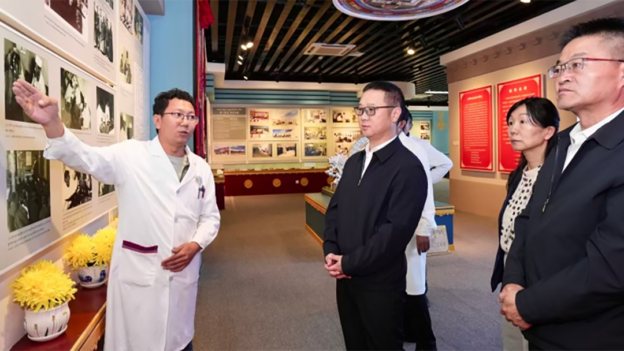
Lhasa, Xizang – 12 Sep 2026 – Huang Guo, Party Secretary and Commissioner of China’s National Medical Products Administration (NMPA), recently led a delegation to Lhasa and Shannan (Lhoka) in the Xizang Autonomous Region to investigate the high‑quality development of Tibetan medicine, visiting pharmaceutical enterprises, medical institutions, grassroots market regulators and Tibetan medicinal‑material cultivation and breeding bases – and directing regulators to accelerate Tibetan medicine standard‑setting, conversion of classical formulas and hospital preparations into new drugs, and standardized cultivation of Tibetan medicinal materials.
Inspection Milestone
| Item | Detail |
|---|---|
| Delegation Head | Huang Guo – Party Secretary & Commissioner, NMPA |
| Locations | Lhasa and Shannan, Xizang Autonomous Region |
| Sites Visited | Pharmaceutical enterprises, medical institutions, grassroots market regulation departments, Tibetan medicinal‑material cultivation & breeding bases |
| Focus Areas | Tibetan medicine standard formulation/revision; new drug R&D; application of institutional preparations in medical facilities; grassroots drug regulation; production management of Tibetan medicinal materials |
| Participating Units | Heads of relevant NMPA departments and directly affiliated units |
| Stated Goal | Inherit, develop and utilize Tibetan medicine well – upholding both inheritance and innovation |
Inspection Itinerary & Focus
- Lhasa: The delegation visited pharmaceutical enterprises and medical institutions, examining in detail the formulation and revision of Tibetan medicine standards, new Tibetan drug R&D, and the clinical application of Tibetan medicine institutional preparations (hospital‑compounded formulations).
- Shannan: The delegation inspected grassroots market regulation departments, pharmaceutical enterprises and Tibetan medicinal‑material cultivation and breeding bases, reviewing grassroots drug supervision, innovative drug development and production management of Tibetan medicinal materials.
Policy Directives Outlined
- Standards Acceleration: Hasten the improvement of the Tibetan medicine standards system, leveraging the sector’s unique resource endowment and formulary experience.
- Classical‑Formula Development: Intensify the development and utilization of ancient classical formulas, and promote the conversion of classical prescriptions and medical‑institution preparations into new drugs.
- Three‑in‑One Evidence System: Deepen the application – in Tibetan new drug R&D – of the registration review evidence system that combines traditional Chinese medicine theory, human‑use experience and clinical trials, and strengthen communication and exchange across the entire R&D process.
- Resource Protection & Sustainability: Strengthen the protection of Tibetan medicinal‑material resources, advance standardized (Good Agricultural Practice‑style) cultivation, ensure material quality and promote the sustainable development of Tibetan medicine.
Regulatory Context
- Three‑Combined Evidence Pathway: The theory–human experience–clinical trial evidence framework was introduced nationally for traditional Chinese medicine registration, allowing human‑use experience to support drug applications – its explicit extension to Tibetan medicine lowers the evidentiary friction for ethnic‑medicine drug developers.
- Institutional‑Preparation Pipeline: Hospital preparations with long clinical track records are a recognized seed pool for new drug conversion under China’s TCM reform agenda; Tibetan medicine institutions in Xizang hold sizable preparation portfolios.
- Classical Formula Catalogs: Ancient classical formulas enjoy simplified registration pathways when developed per catalogue requirements, a mechanism the NMPA now seeks to activate for Tibetan formulary heritage.
- Grassroots Supervision: Inspection of county‑level market regulation capacity signals attention to enforcement infrastructure for cultivation, processing and distribution quality of Tibetan medicinal materials.
Market Impact & Outlook
- Ethnic‑Medicine Modernization: The inspection places Tibetan medicine high‑quality development squarely on the NMPA’s national agenda, likely catalyzing standards issuance, registration guidance and pilot programs for Xizang‑based enterprises.
- R&D Opportunity Window: Developers able to package classical formulas or institutional preparations into registrable new drugs – supported by the three‑combined evidence system – gain a differentiated, policy‑endorsed pathway.
- Supply‑Chain Upgrading: Emphasis on resource protection and standardized cultivation points to investment in GAP‑compliant cultivation and breeding bases, with implications for material quality, traceability and long‑term supply security.
- Timeline & Measures: Specific policy instruments, funding and deadlines emerging from the inspection were not disclosed in the readout.
Forward‑Looking Statements
This brief contains forward‑looking statements regarding Tibetan medicine standard‑setting, classical‑formula drug conversion, registration evidence‑system application and cultivation standardization following the NMPA inspection in Xizang. Actual outcomes may differ due to risks including policy formulation timelines, registration review requirements, resource and supply‑chain conditions, and enterprise execution capabilities.-China Health Reform Pulse
Policy Source: https://www.nmpa.gov.cn/yaowen/ypjgyw/ypyw/20260911195710154.html